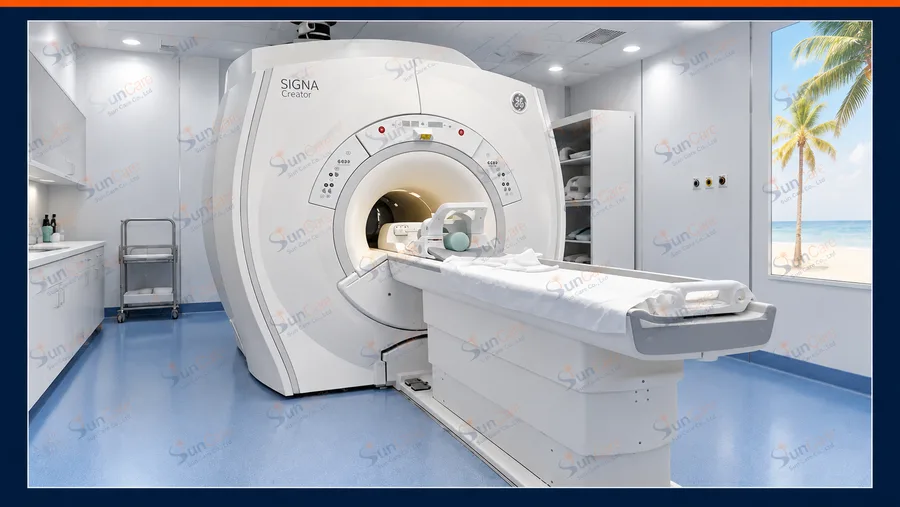
GE SIGNA Creator 1.5T
Cryogenic assessment, controlled de-energization and technical dismantling.
Explore project
Helium refills, cryogenic monitoring, coldhead and compressor service, controlled quench and magnet ramp-up — the specialised work that keeps a superconducting magnet cold and in service.
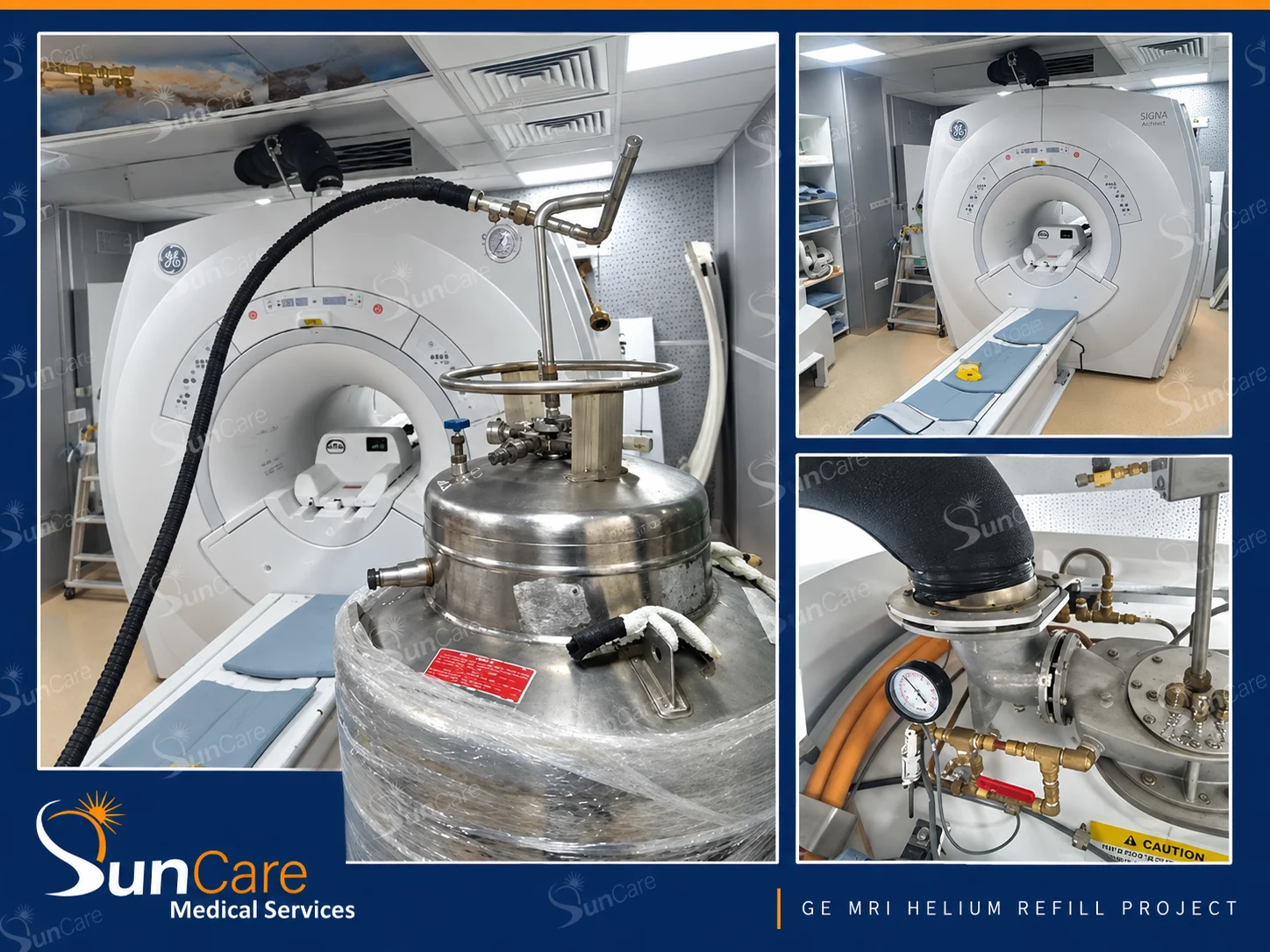
An MRI magnet is superconducting: its coils carry current without resistance only while they sit in liquid helium near absolute zero. Let the level fall far enough and the magnet quenches — the helium boils off, the field collapses, and the system is out of service until it is refilled, ramped and re-shimmed. Watching the level is far cheaper than recovering from that.
Each can be a single visit or part of a maintenance contract. All of them start with the same safety checks.
Transfer from a dewar into the magnet under controlled pressure, with the level, pressure and alarm state recorded before and after. Repeat visits build a boil-off history, which is what tells you whether the magnet is simply consuming helium or losing it.
The coldhead and its compressor are what keep boil-off near zero. We check and service the coldhead, the compressor, the helium lines and the water or air cooling behind them — a rising boil-off rate is usually a cooling problem, not a helium problem.
When a magnet has to be de-energized — for service, decommissioning or an emergency — it is done deliberately, not by accident. Site evacuation, Civil Defense notification, electrical isolation, external vent verification and oxygen monitoring come first; the burst disc is replaced afterwards.
After a quench or a magnet move, the field has to be brought back: cool-down, fill, ramp to field and shimming, followed by imaging checks before the system is handed back to the department.
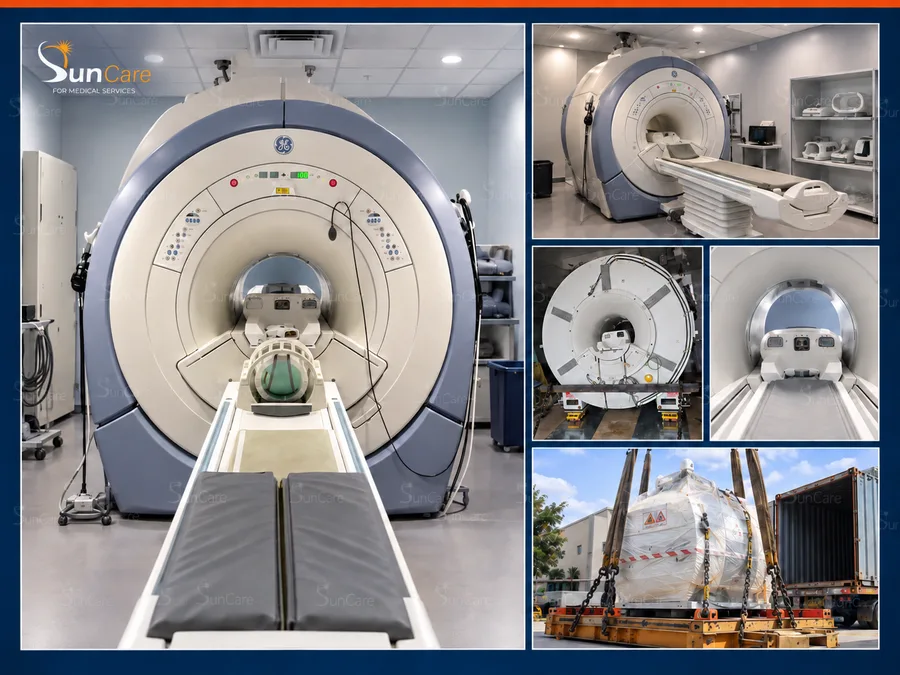
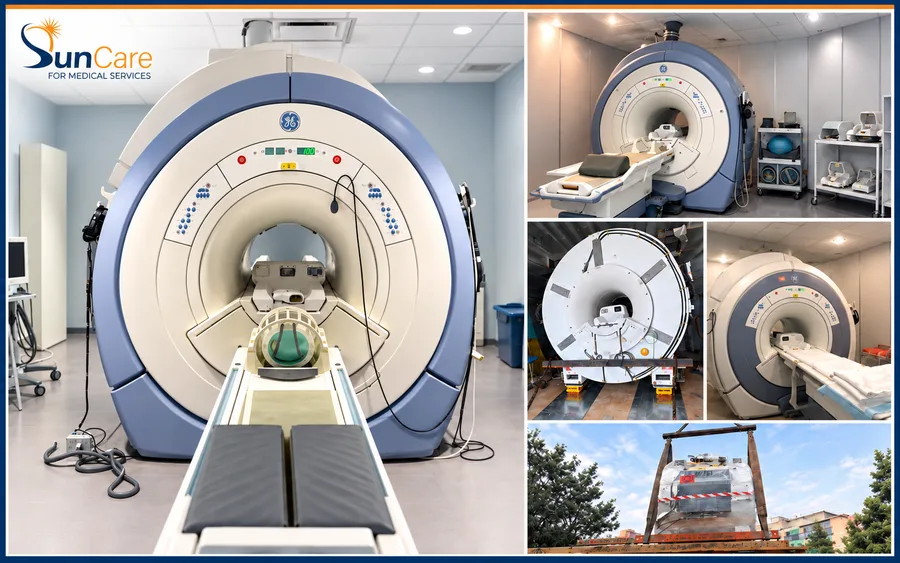
Helium transfers, cryogenic readings, coldhead and compressor checks and service-mode verification on GE and Philips MRI systems — our own photographs.
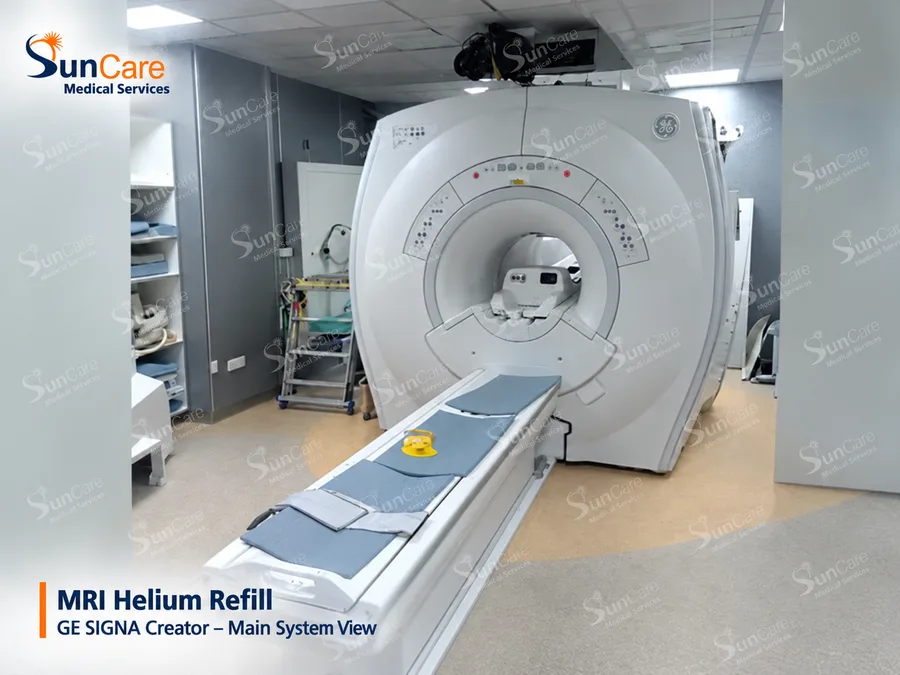
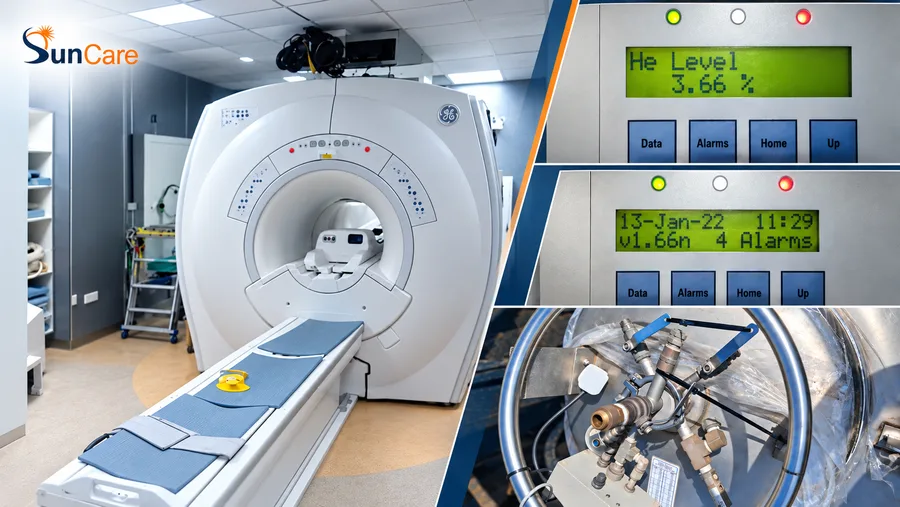
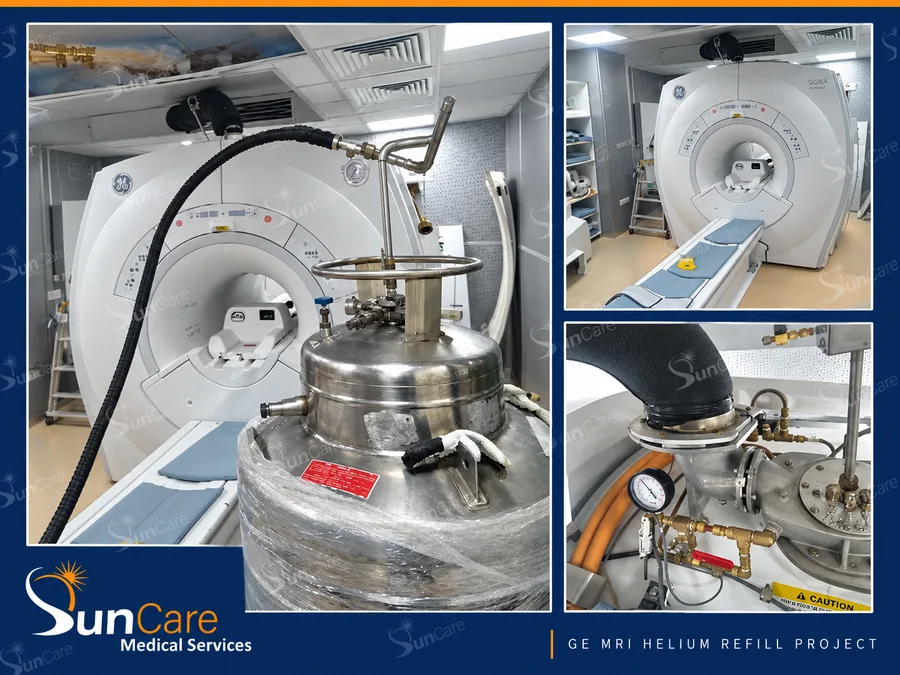
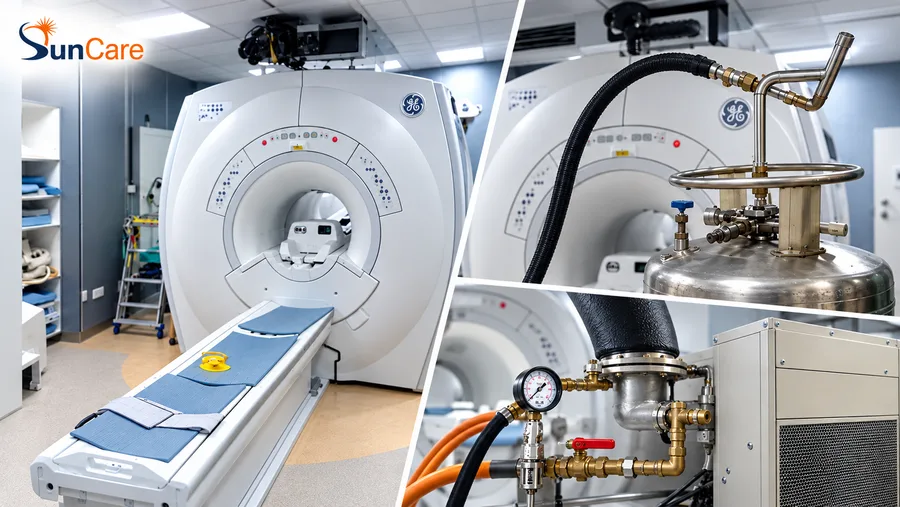
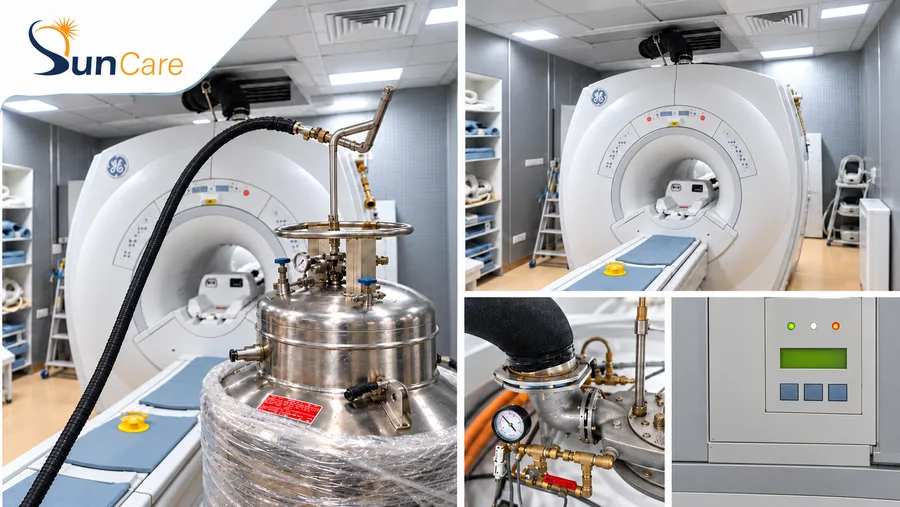
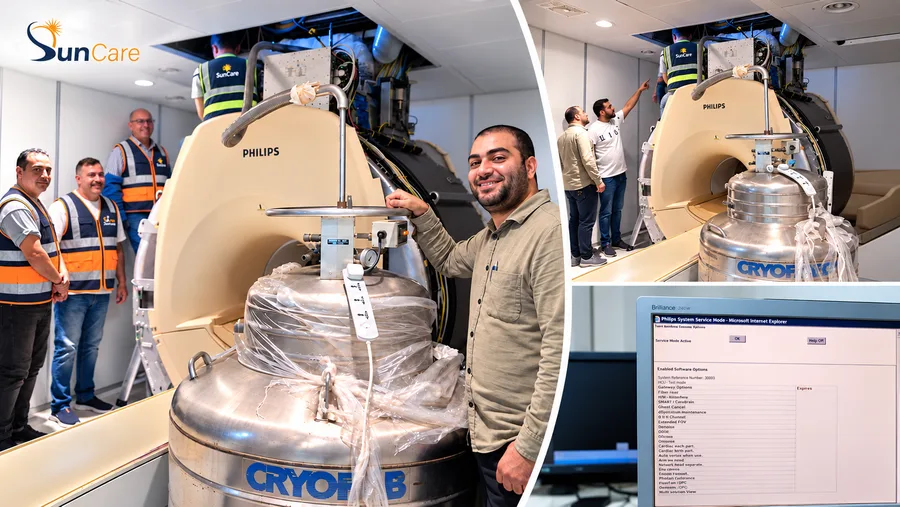
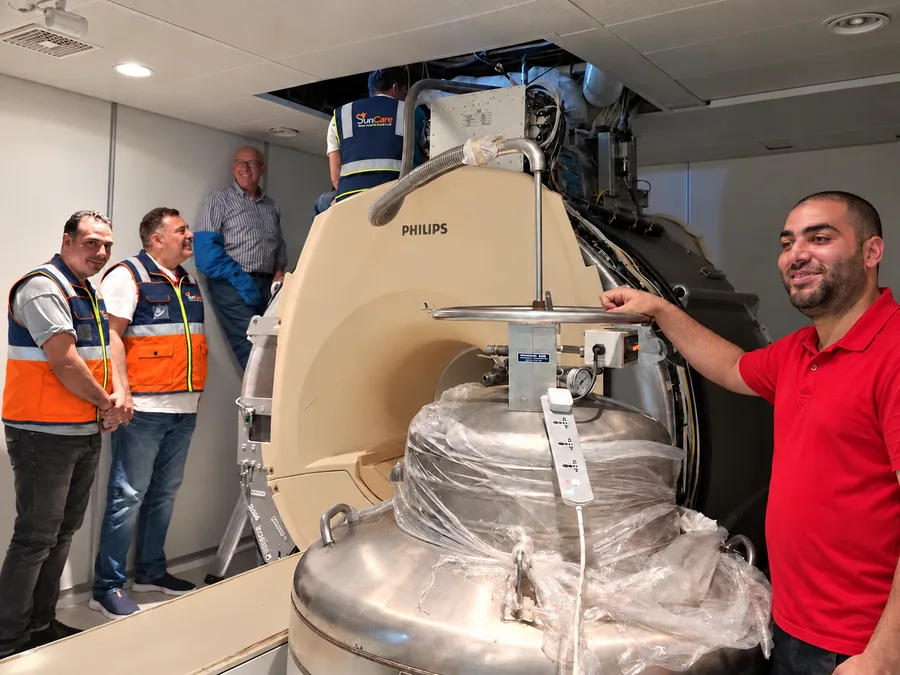
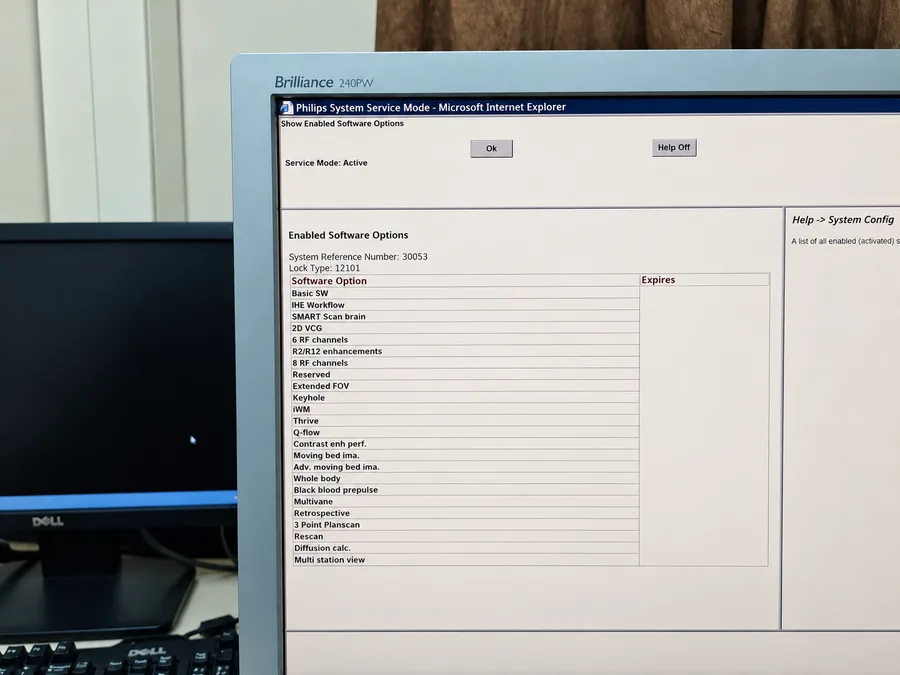
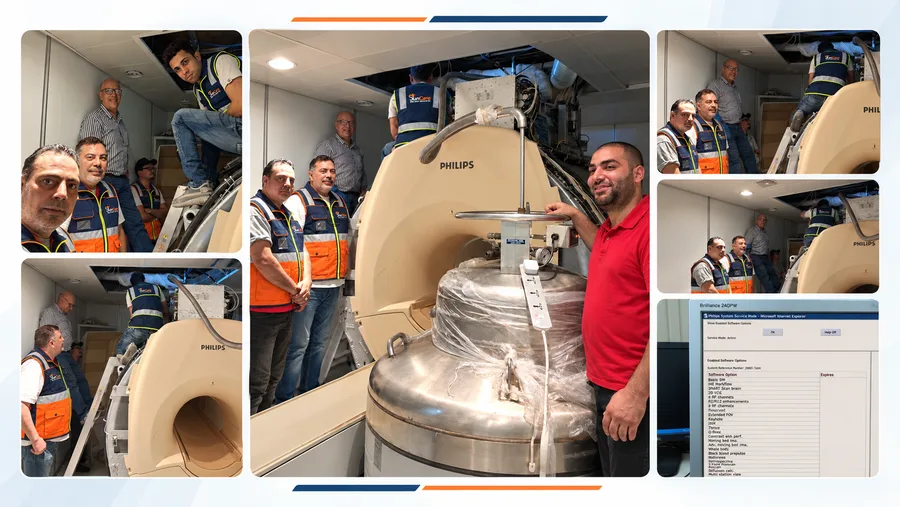
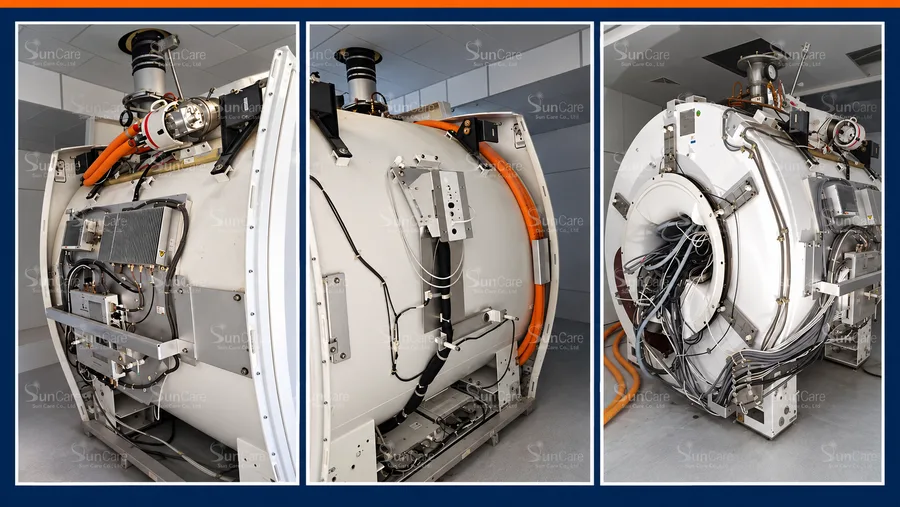
The same sequence every time, so the readings from one visit can be compared with the next.
Helium level, pressure, coldhead temperatures and any standing alarms are recorded as found, along with the time since the last fill.
The external vent path, the oxygen monitor and the magnetic exclusion zone are confirmed before a dewar is brought anywhere near the magnet.
The dewar is connected, the line purged and the transfer run at controlled pressure, with the level watched throughout rather than filled and left.
Coldhead, compressor and cooling are inspected while the engineer is on site, so a fast boil-off is found now rather than at the next low-helium alarm.
Final readings, the quantity transferred and the expected interval to the next fill are written up, with a recommendation if the trend is wrong.
Cryogenic assessment, controlled quench and magnet handling in our documented projects.